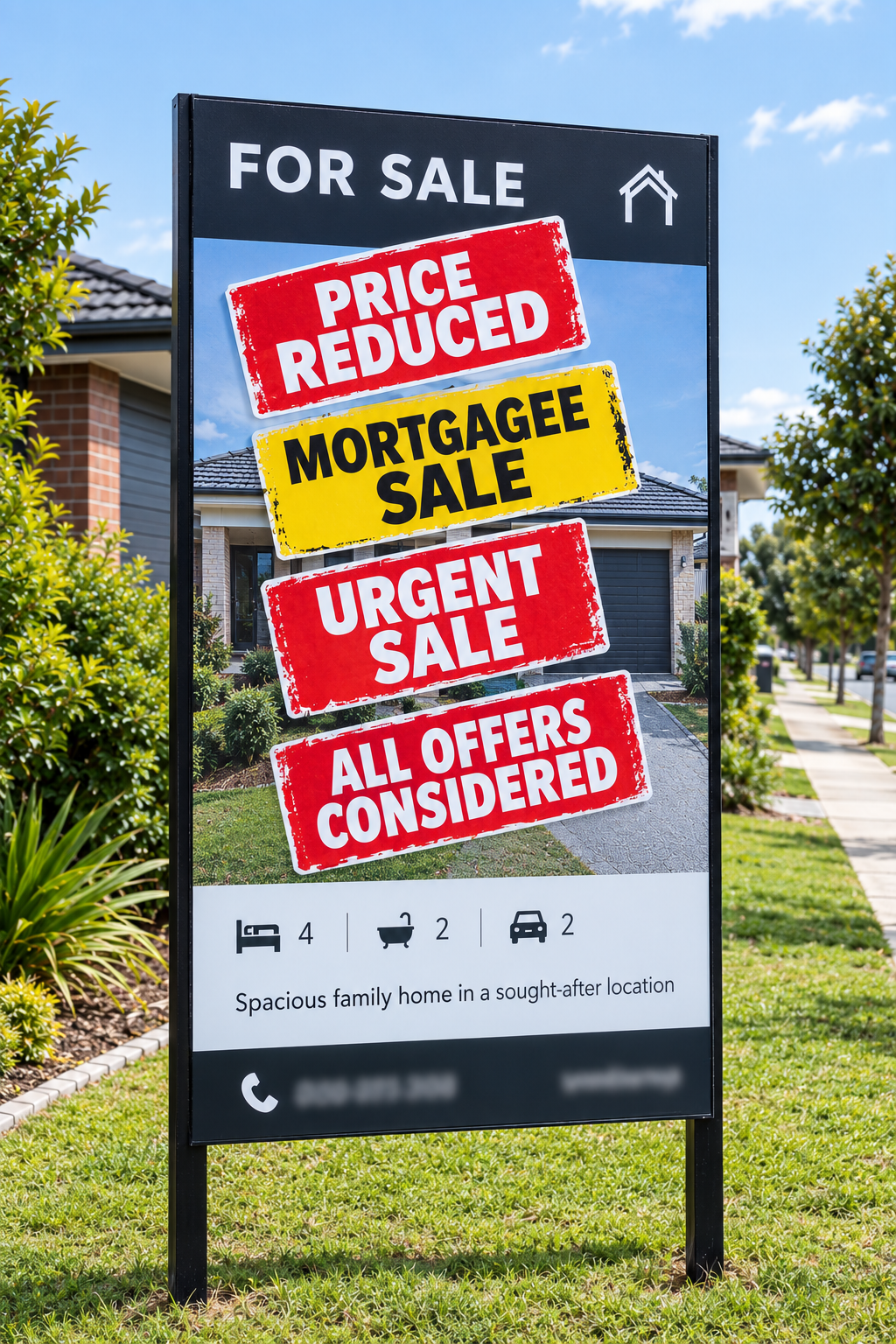

Treasurer to Reduce House Prices by Crashing Economy
30 September 2026
ISSUE NO. 45
CANBERRA — The Treasurer has confirmed that the Government will make houses cheaper by ensuring buyers can afford to pay less for them. The measures include higher taxes, higher living costs and higher mortgage repayments. He said the fewer Australians who could afford a house, the fewer would attempt to buy one, the lower demand would be, and the more affordable houses would become.
The first stage would address investors. Higher taxes would make buying a property to rent to someone else less attractive. Investors who decided against buying would cease competing with first home buyers. The Treasurer said this would give young Australians a better opportunity to purchase a home by making it an investment that other people no longer wanted.
The reforms would also assist by making it more difficult to work out how to purchase one. Previously, an investor and their accountant could compare ownership individually or through a trust, consider the capital gains tax discount, and settle on a structure. Treasury had identified scope for additional considerations.
Under the new arrangements, the investor would need to estimate future inflation, the expected capital gain and the likely holding period before determining the effect of indexation. A company might offer a lower tax rate but would not receive indexation, and further tax could arise when the money was taken out. A trust would require consideration of the new minimum tax and how it interacted with the minimum tax on capital gains. Buying individually might avoid some of those questions but create difficulties for asset protection and estate planning. The accountant would prepare several models.
Those models would then need to be revised when the Treasurer announced further amendments to clarify the original intention of the previous amendments. The Treasurer said the changes would provide certainty. Further changes to provide additional certainty were being prepared.
Investors could defer purchasing until the position became clear. Officials said this would reduce demand without requiring the Government to increase the tax rate further. The Treasurer said the consultation process was already delivering benefits.
The withdrawal of investors could also place upward pressure on rents. Officials said higher rents would encourage tenants to consider buying their own homes, while reducing the amount they could save towards doing so. This would preserve the aspiration to home ownership without placing unnecessary pressure on prices.
There were already encouraging signs. National home values fell for five consecutive months to August and were 3.6 per cent below their March peak. By August, falls were being recorded in 93 per cent of capital city suburbs. The Treasurer said the Government understood that Australians were concerned about falling house prices and remained committed to making houses cheaper.
Officials expected the falls to produce further reductions in demand. A person who thought a house would be cheaper next month had a reason not to buy it this month. If enough people waited, the house would become cheaper next month, confirming that waiting had been the correct decision. They could then wait again. The Treasurer said first home buyers had waited a long time for more affordable housing and should be pleased that waiting was now contributing to it.
Treasury advised that affordability should also be measured in real terms, adjusted for inflation. A house whose asking price remained unchanged would become cheaper in real terms if everything else became more expensive. Officials said this allowed progress on housing affordability to be made at the supermarket, the petrol station and through household electricity bills.
The Treasurer said the Government had considerable experience in spending money and would continue to apply it. The Budget forecast payments of $829.6 billion in 2026–27, approximately $18 billion more than had been forecast in December. Further opportunities to support demand were being identified.
Spending on tax compliance offered particular advantages. The Government could investigate whether investors had correctly applied rules whose operation was still being clarified. The resulting assessments would fund further expenditure. Investors would have less money available to buy property, while the Government would have more money available to contribute to inflation.
The Treasurer had granted the ATO additional funding to expand its compliance activities. An ATO spokesperson said this would allow it to recruit more officers like John, who had increased collections through a firm approach to interest remission and strict deadlines for taxpayer responses. John’s files had continued to generate revenue throughout his six weeks of leave. The spokesperson said the ATO was keen to build on that performance.
A separate spokesperson said the funding would not be used to recruit additional officers but to fit out a new building. The realignment of the office was astrologically important to the consistent administration of interest remission.
A third spokesperson said the ATO was not aware of any additional funding. The agency had always been adequately resourced.
The Reserve Bank had raised the cash rate four times this year to reduce inflation. The Treasurer said this was an important driver of falling house prices. Officials said the Government was assisting the Bank’s work by continuing to spend.
Higher rates increased mortgage repayments, reducing the amount a bank would lend. A buyer who could borrow less would have to offer less, and a vendor who needed to sell would have to accept it. Officials acknowledged that repayments on the smaller mortgage might exceed those previously payable on the larger mortgage. The house itself would nevertheless be cheaper.
The Institute of Taxation, Actuarial and Accounting observed that the strategy depended on Australians becoming progressively less able to afford the things whose affordability the Government was improving. The Treasurer said the Institute had correctly identified the demand side of the policy.
A broader economic slowdown would extend the benefits. Households concerned about their employment would be less likely to take on a mortgage. Households that lost their employment would generally be unable to obtain one. Some existing borrowers would also need to sell, allowing the policy to operate on supply and demand simultaneously.
The Treasurer said he understood that inflation and cost-of-living pressures were making it increasingly difficult for Australians to afford a home. If these pressures persisted, the Government would respond with further initiatives to make housing cheaper.
The Daily Cartland is a work of satire. The Treasurer has confirmed that his tax policy is not.